EDGE LABS / BUILD IN PROGRESS
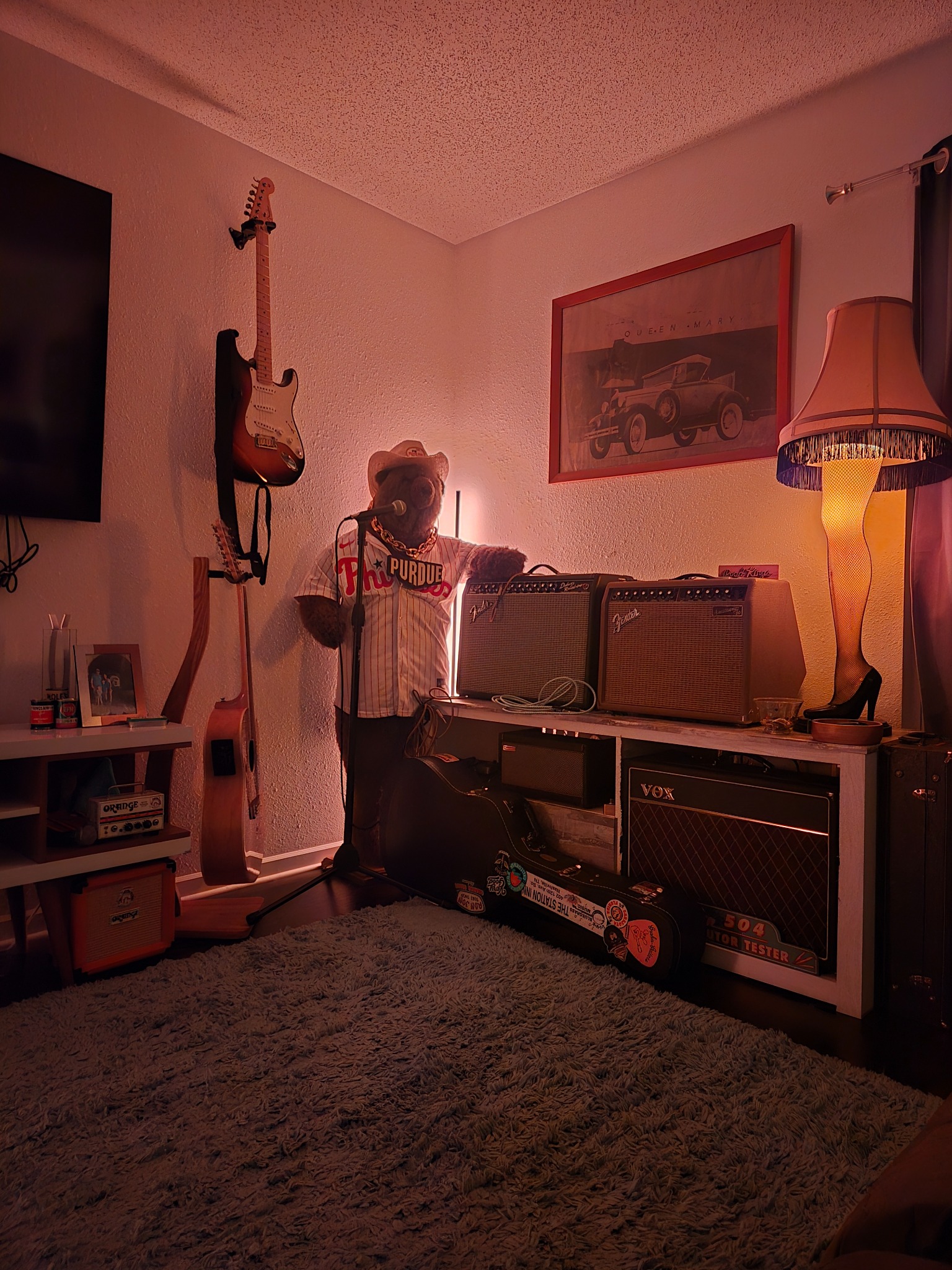
Rosie the Bear Studio
Giving AI a real job instead of another prompt.
Rosie is Seth’s AI Music Director.
We’re using a working music studio to answer a bigger question:
What happens when AI is given a specific job, taught the right knowledge, given memory and tools, and measured on whether it can actually help finish the work?
Rosie’s first job is music. What we learn here is being carried into the AI systems we’re building for marketing and business operations at The Edge.
The live studio uses are getting more specific: Seth’s MPC loop, Vivian’s first guitar wins and a practice partner for trumpet.
Same architecture. Different job.
BUILD NOTE / TONIGHT
Rosie moved from an idea into a working agent.
The important step was not making another chatbot. It was giving Rosie a job, a memory, a voice direction and a first test she could either pass or fail.
Tonight Rosie was created inside the AIPI agent system. We named her Rosie, selected GPT-4.1, wrote her character instructions and gave her long-term memory around Seth’s studio, the MPC One+ and the first usable loop.
Then we tested her in preview chat. When asked for Seth’s first simple music loop, Rosie started like a coach. When pushed with “MPC One+ drums. Give me Step 1 only,” she gave one step and waited for a checkpoint.
That is the behavior we need: one useful next move, then feedback.- Built
- Rosie agent, GPT-4.1, character instructions and long-term memory.
- Tested
- Preview chat with Seth’s first simple music loop and an MPC One+ drums prompt.
- Learned
- Rosie can follow the one-step checkpoint pattern, but the MPC directions need more button-level specificity.
- Next
- Pair Rosie to the AI Pi device, tune the voice and run the first real MPC loop session.
THE SHARED SYSTEM
We’re transposing the architecture, not the task.
The lesson isn’t that every business needs an AI bear. Useful AI needs a job, context, tools, memory and a finish line.
AI Music Director + family studio coach
AI Marketing + Operations Worker
Songwriting, production, recording, MPC workflows, beginner guitar and trumpet practice
SEO, AI search, client strategy, analytics and business processes
Seth, Vivian, the studio, the current practice session, the equipment and what happened previously
Client goals, websites, analytics, previous work and business constraints
What worked, what failed, decisions already made and where the session stopped
Previous findings, decisions, completed work and corrections
MPC One+, studio equipment, audio systems and eventually more direct control
Business data, software, websites, documents and approved workflows
Move a piece of music from an idea toward something finished
Complete meaningful marketing and operational work
Did the work actually move forward?
Did the work produce a useful business result?
The architecture can travel. The human judgment stays.
LIVE BUILD SCOREBOARD
What We’re Testing Right Now
Failed experiments stay on the board. They’re part of the data.
Define Rosie’s job
Rosie is the AI Music Director, not a general-purpose chatbot.
Create Rosie inside AIPI
Rosie now exists as a configured agent using GPT-4.1, a defined role, character instructions and long-term memory.
Expand the family studio roles
Rosie is being shaped for Seth’s MPC work, Vivian’s beginner guitar lessons and trumpet practice support.
Build Rosie’s music knowledge
Organizing songwriting, production, MPC and recording knowledge around the job.
Teach Rosie the MPC One+ workflow
The goal is helping Seth move from an empty project toward completed music—not merely answering MPC questions.
Teach Vivian beginner guitar
Keep the instructions short, encouraging and simple enough for a young learner to use.
Support trumpet practice
Give the player short backing lines, rhythm prompts and call-and-response patterns so practice feels more musical.
Maintain session context
Rosie should understand where the previous session stopped without rebuilding the entire context every time.
Voice through the Positive Grid Spark 40
Bluetooth connected, but ChatGPT audio did not reliably route through the amplifier.
Pair Rosie to the AI Pi
The browser agent works. The next hardware step is binding Rosie to the device with its six-digit code.
Far-field microphone / room interface
Explore how Rosie can eventually function naturally inside the physical studio.
Direct tool interaction
Long-term: let Rosie do more than instruct and interact with approved tools.
Transfer lessons to Eddie
Translate the working architecture—and the failures—into business AI workflows.
BUILD NOTE / SEPTEMBER 2026
Giving Rosie a Voice in the Room
FAILED TEST Positive Grid Spark 40 audio path
What we wanted
Rosie shouldn’t feel like someone staring at ChatGPT on a phone. Seth should be able to play guitar, use the MPC and talk naturally while Rosie’s voice comes from the room.
What we tried
We paired ChatGPT audio with a Positive Grid Spark 40 guitar amplifier using Bluetooth.
What happened
The devices showed as paired, but ChatGPT’s voice continued coming through the phone rather than reliably through the Spark. We tested audio settings and different Bluetooth connections. The guitar side worked. The Rosie voice side did not.
What we learned
A component can technically be “connected” while the complete workflow still fails. The interface between systems matters just as much as the individual technology. Adding more technology isn’t always the next answer.
What we’re doing next
Test a simpler dedicated Bluetooth speaker before adding interfaces, adapters or more complicated audio routing.
THE FIRST ASSIGNMENT
Get Seth from a question to his first completed loop on the MPC.
Seth should be able to ask Rosie, “I want to make a simple rock drum loop. What do I do?”
Rosie should understand the MPC and the music behind what Seth is trying to accomplish, then give him the next useful answer. He does it. Then he asks, “Done. What’s next?”
She remembers where they are and gives Seth the next step.
Eventually the loop plays.
That’s the test.THE FAMILY STUDIO ASSISTANT
The job is still music, but the users are becoming clearer.
Rosie needs to be useful in the room, not impressive on paper. That means helping different players practice in the way they actually need help.
Seth’s AI Music Director
Rosie helps Seth build loops, shape hooks, make practical song decisions and keep moving when the next step is unclear.
Vivian’s Beginner Guitar Coach
Rosie keeps guitar practice simple: one chord, one tiny song, one small win and encouragement that fits a young learner.
Trumpet Practice Partner
Rosie can lay down short backing lines, rhythm ideas and call-and-response prompts so practicing alone feels more like making music with someone.
This is the more honest version of the experiment: AI helping a family keep practicing, keep playing and turn small musical moments into finished work.
THE EXPERIMENT
Small job. Clear finish line.
We are intentionally beginning with something narrow enough to measure. Rosie does not need to know everything. She needs the right things for this job.
Job
AI Music Director and family studio coach
Knowledge
Music, songwriting, recording, the MPC One+, beginner guitar and trumpet practice
Context
Seth’s question, Vivian’s guitar lesson, the trumpet practice moment and the step already completed
Memory
Where the work stopped and what comes next
Tools
Instructions now; connected music software and equipment where practical later
Goal
Seth’s first completed MPC loop, then small repeatable practice wins
Check
The loop plays, the chord rings or the practice line improves
HUMAN IN THE LOOP
Rosie does not replace the musician.
She helps turn knowledge into useful next actions.
The human still has taste.
The human still decides what sounds good.
The human still practices.
The human still plays.
The human still creates.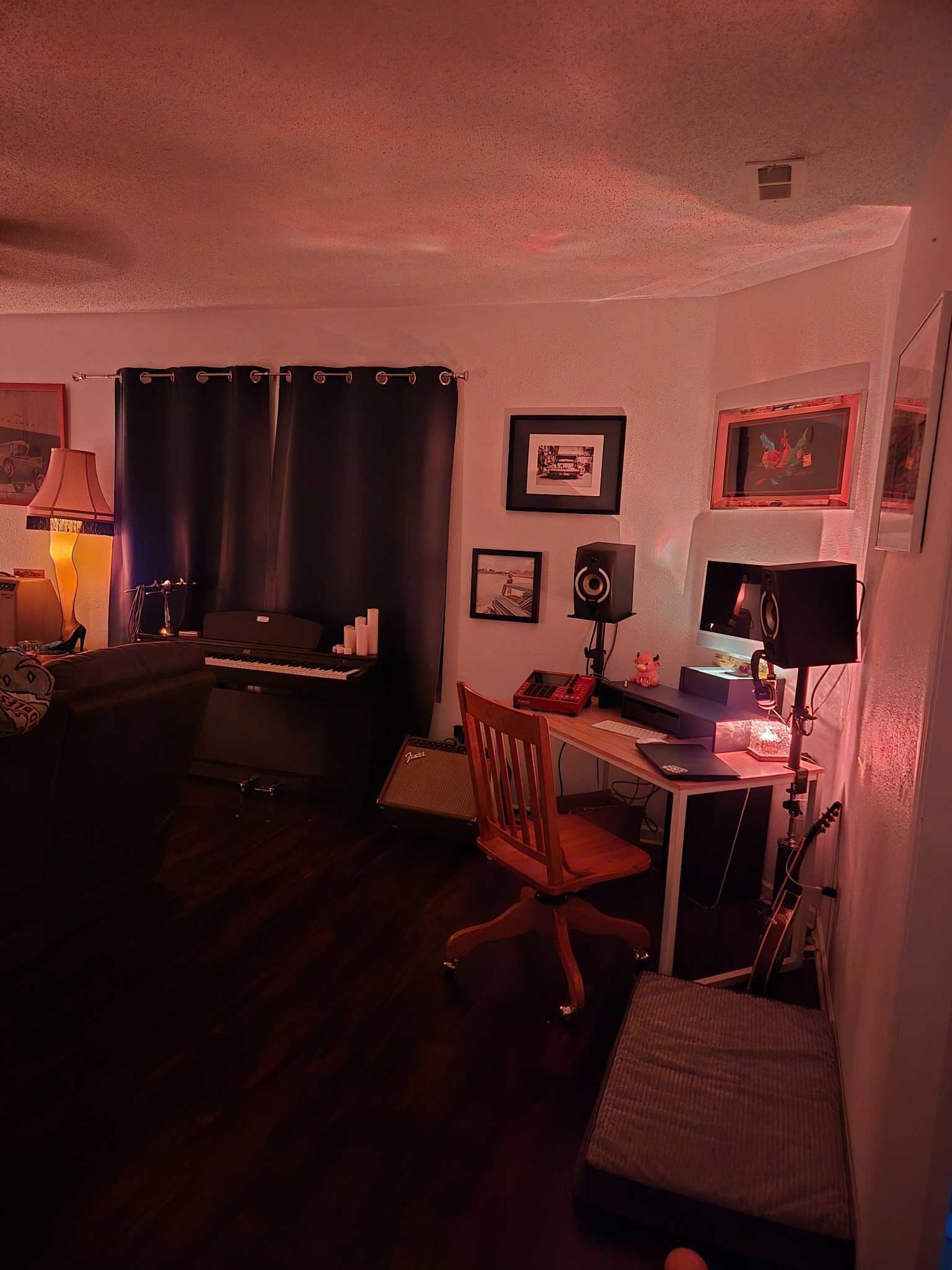
WHY A MUSIC STUDIO?
A studio is a useful AI laboratory.
Look around one and you find tools, instructions, theory, software, creative decisions and years of experience—all sitting close together.
All of those things can be useful individually. The hard part is connecting the right knowledge to the right tool at the right moment.
That should sound familiar to anyone running a business.FROM SETH’S STUDIO
The tools behind Rosie’s first job.
These are not stock images or a simulated setup. They are the real machine, menus and supporting gear Rosie’s guidance has to make sense inside.
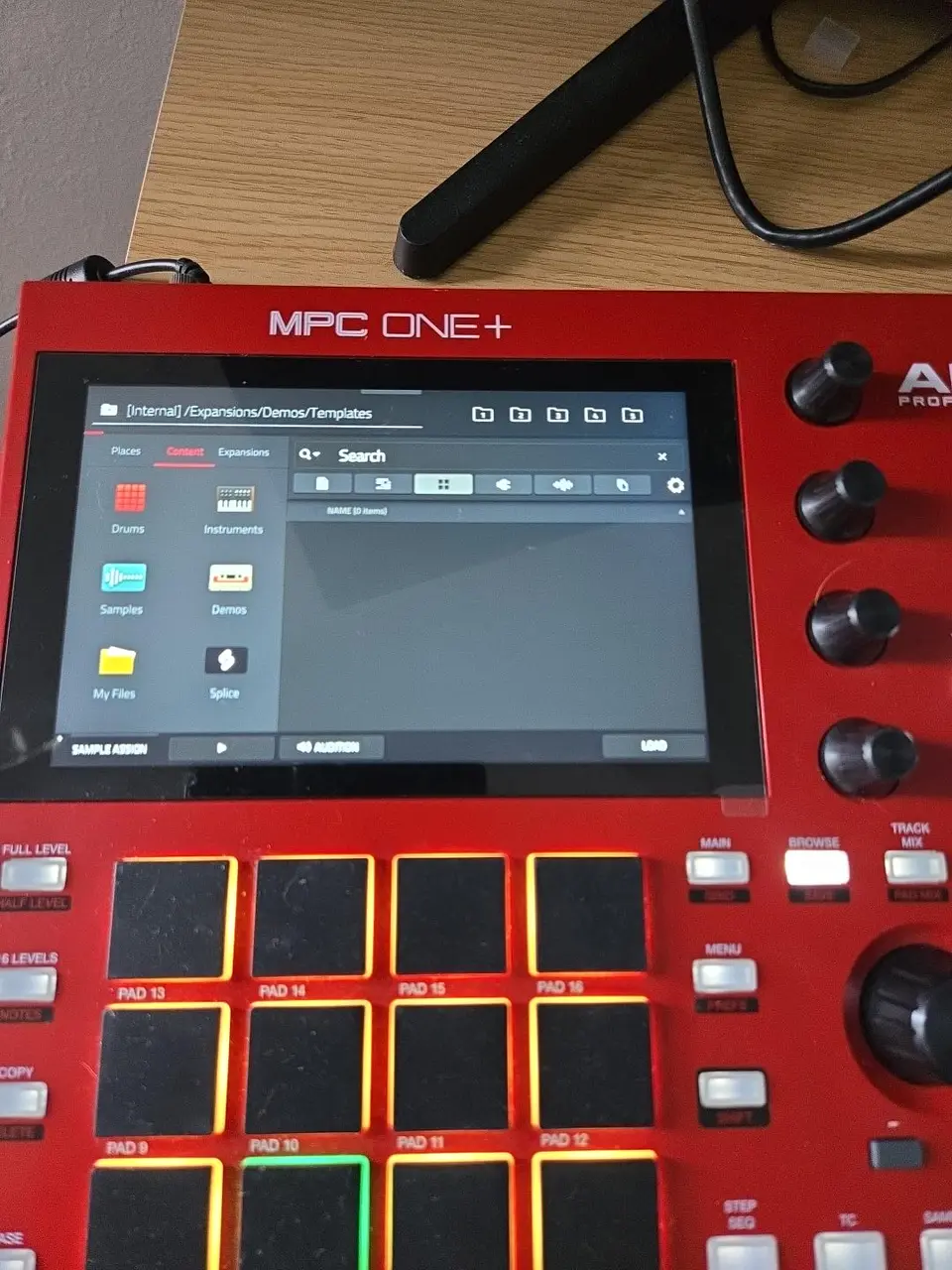
The menus, content and sample structure are part of what Rosie must understand before she can guide the next move.
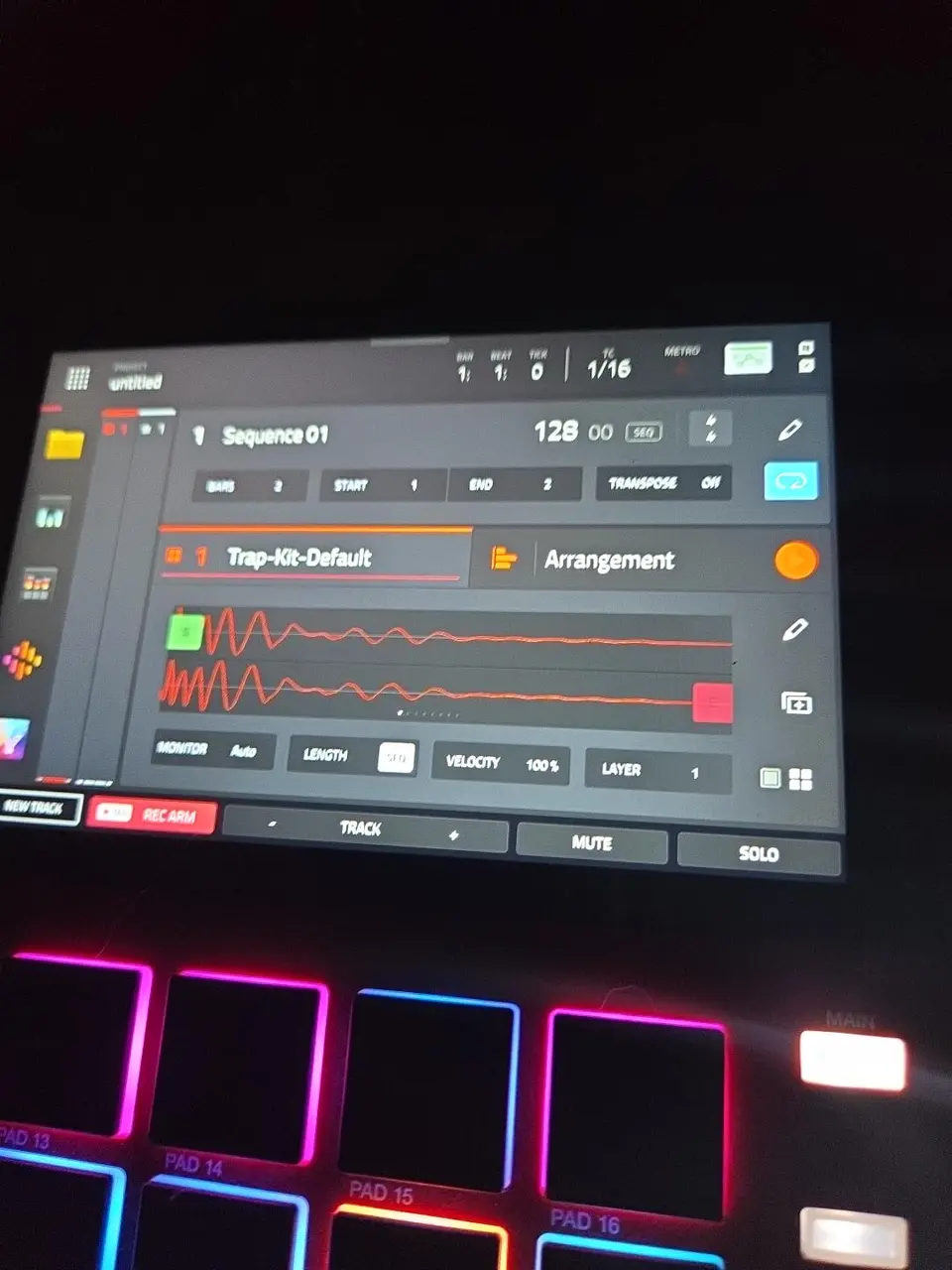
A sequence taking shape on the MPC. Rosie’s answer has to become a useful action on the machine.
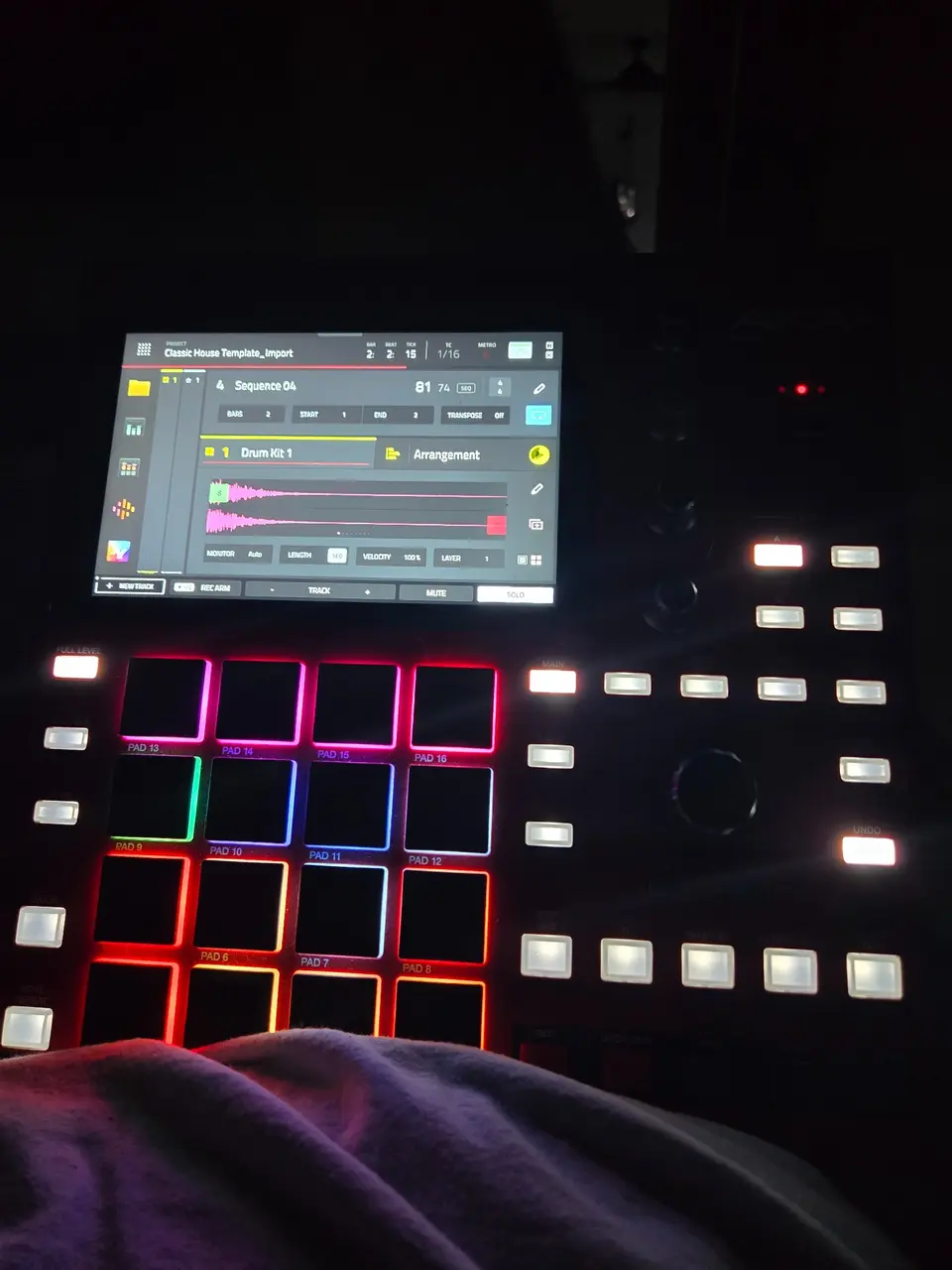
The experiment has to hold up during a real working session—not only inside a chat window.
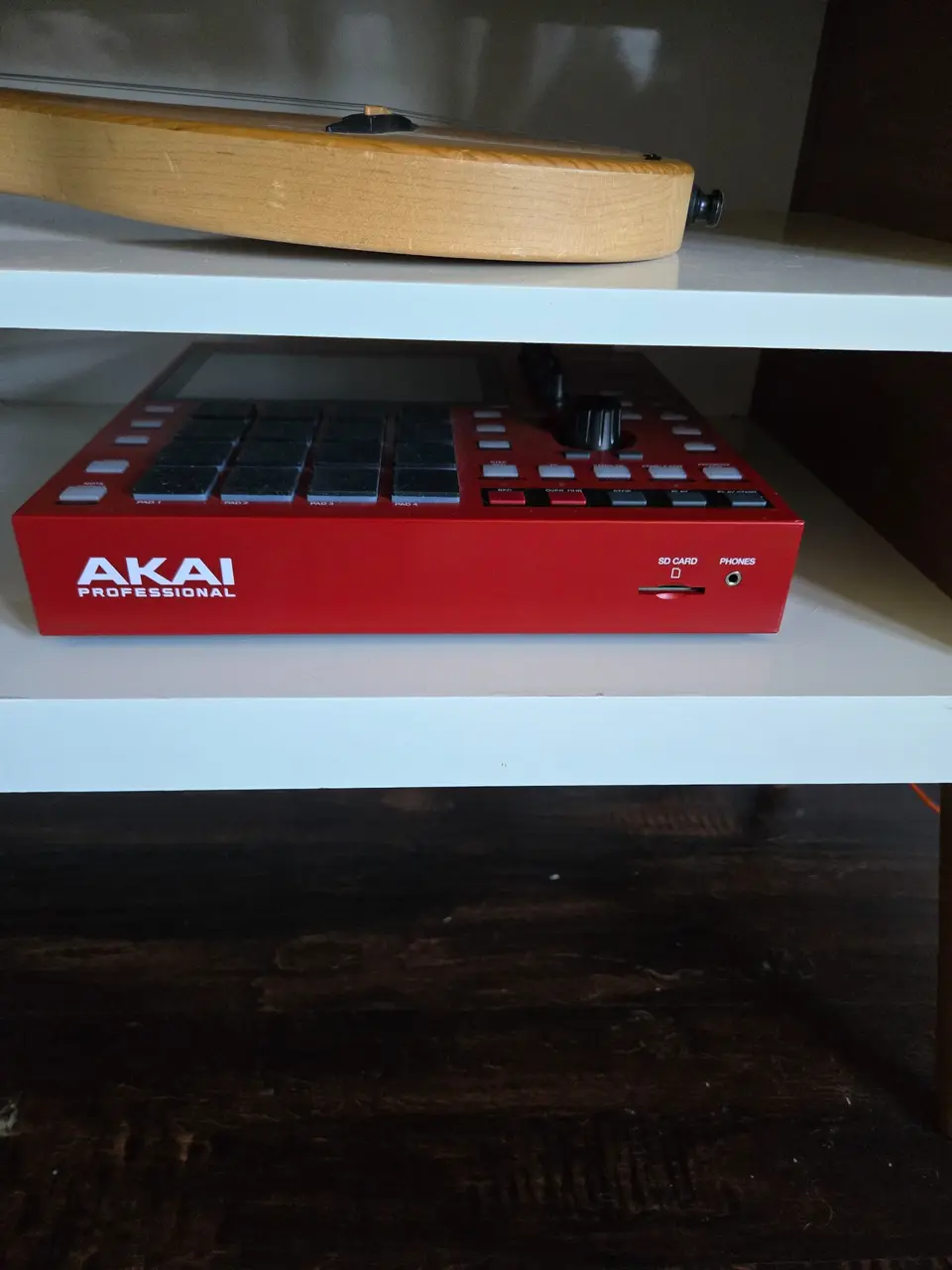
The physical MPC in Seth’s studio is the focus of Rosie’s first clearly defined assignment.
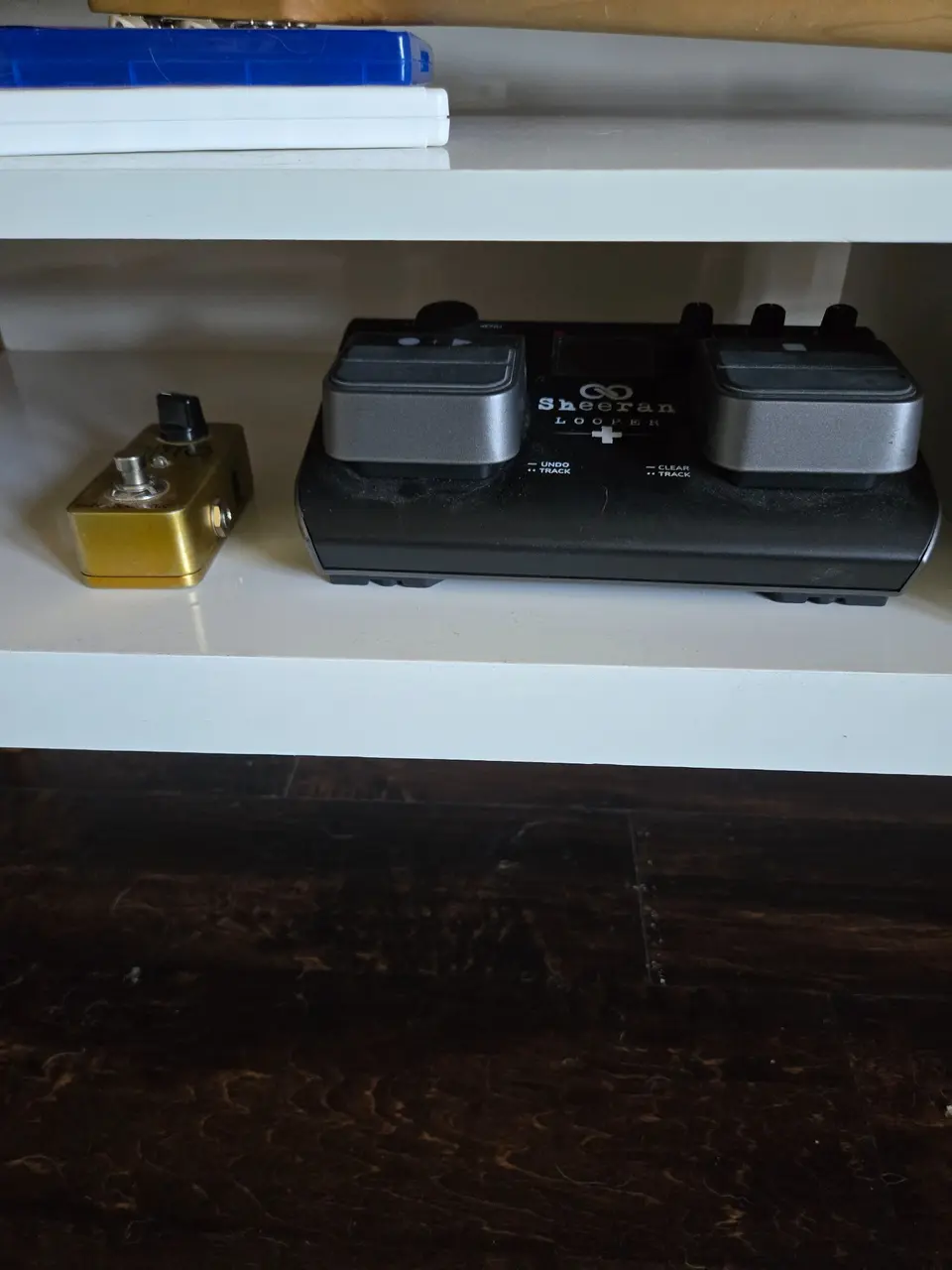
The wider setup includes looping and guitar tools Rosie may need to understand as the work expands.
THE POINT
Rosie has to understand the environment around the job.The machine. Its language. The wider rig. And the exact moment Seth needs the next step.
THE MOVE FROM MUSIC TO BUSINESS
Transpose.
In music, transposing means taking something that works in one key and moving it into another.
That is essentially what we are doing next.
We are not taking Rosie’s music job and applying it to marketing. We are transposing the system behind Rosie.
WORKING LESSONS
What Rosie Is Teaching Us
This list will change as the project does. These are the lessons that have survived the work so far.
Start with the job, not the AI.
Don’t begin with “What can ChatGPT do?” Begin with: What job are we trying to finish?
Give the AI a finish line.
“Help me make music” is vague. “Help me create the first complete MPC loop with a beginning, progression and ending” can be evaluated.
Context matters.
Knowing the software isn’t enough. Rosie needs to know the equipment in the room, what Seth is trying to accomplish and what happened previously.
Memory changes the experience.
If every session begins by rebuilding all previous decisions, the system becomes another administrative task.
Simpler can beat smarter.
The Spark experiment is a good example. The sophisticated path isn’t automatically the useful path.
A working agent beats a clean theory.
Tonight Rosie had to answer. The preview chat immediately showed what worked and what still needed tighter instructions.
Measure completed work.
The success metric is not how many prompts were sent. It is whether the human got closer to finishing the work.
Rosie learns music.
Eddie learns marketing + operations.
Same architecture. Different job. The finish line is completed work.WHY THIS MATTERS TO A BUSINESS
The intelligence is often already there.
The information and tools are disconnected.
Businesses already hold enormous amounts of intelligence. The problem is often not a lack of information. It is getting the right knowledge, context and tool together when a person needs to act.
That is the same basic problem we are deliberately exploring with Rosie.
What happens when we can give an AI worker the right company knowledge, context, memory and access to the right tools—then give it a clearly defined job?
WHAT WE ARE EXPLORING
Possible applications, not completed capabilities.
Eddie does not currently perform every task below. These are areas we are testing or working toward as we connect knowledge, tools and approval steps carefully.
ENGINEERING NOTES
The deeper hardware workbench.
Microphones, Raspberry Pi, ReSpeaker, voice hardware and audio routing matter. They sit below the story because every specification still has to answer the same question: does it help the person finish the job?
THE PHYSICAL INTERFACE
So What Should Rosie Actually Be?
· BUILDING / RESEARCHING
Rosie started as a knowledge problem.
Could we give an AI Music Director enough knowledge, context and memory to guide Seth from a question to a completed loop on the MPC One+?
As we worked on that problem, another question became unavoidable:
How should Seth actually talk to her?
We do not want the finished experience to require stopping the session, finding a phone, opening an app and typing into another chat window.
Rosie is already standing in the studio. Can she become the interface?
That sent us down another research path. And we learned something useful: most of the individual hardware pieces already exist.
The newest test is more concrete: Rosie now exists as an AIPI agent, and the next step is pairing that agent to the AI Pi device.
We Do Not Need to Invent the Box.
Companies, open-source projects and hardware manufacturers are already building the pieces needed for high-quality voice AI interfaces. We did not invent this category. We are studying existing hardware and deciding which pieces make sense for Rosie’s particular job.
The hardware gives Rosie ears, a voice and a physical presence. Her job, knowledge, memory, context, tools and goals are what make her useful.
The microphone is not the intelligence. The bear is not the intelligence. The AI model by itself is not Rosie either. Rosie is the system we are assembling around a job.
WHAT ALREADY EXISTS
References from the workbench.
Engineering references we studied through official documentation. These are not studio test results, endorsements or manufacturer partnerships.
Home Assistant Voice Preview Edition
ESP32-S3 · Dual microphones · XMOS audio processing
A commercially available, open voice device. Its dedicated audio processing helps clean up what the microphones hear before the rest of the system handles the request.
What we take from itGood voice interaction takes more than attaching a cheap microphone to a computer.
Home Assistant hardware documentation ↗Seeed Studio ReSpeaker XVF3800
Four microphones · XMOS XVF3800 · USB audio
A microphone array with dedicated processing for beamforming, acoustic echo cancellation, noise suppression, automatic gain control and voice activity detection. Those are different ways of helping speech stand out from surrounding sound.
What we take from itIf music is playing while Seth asks a question, Rosie has to distinguish the request from the room around it. That still needs testing here.
Seeed Studio ReSpeaker documentation ↗M5Stack voice / ESP32-S3 hardware
Atom VoiceS3R · ESP32-S3 · Microphone · Speaker · Wi-Fi
M5Stack’s Atom VoiceS3R fits voice input, a speaker, Wi-Fi and a user button into a small programmable device. Its compact design gives us a useful reference for making the electronics less visible.
What we take from itThe physical endpoint does not need to be a large computer. The small device and the wider AI system can do different jobs.
M5Stack Atom VoiceS3R documentation ↗Rabbit r1
MediaTek processor · Screen · Microphones · Speaker · Camera · Network connectivity
Rabbit took a more phone-like hardware approach: a standalone AI device with its own screen, voice controls, camera and connectivity. It is a useful reference for giving AI a dedicated physical interface.
What we take from itWe are not setting out to copy Rabbit. It shows that AI does not have to live only inside a traditional phone or computer application.
Rabbit r1 official user guide ↗WHAT WE ARE LEARNING
Hearing May Matter More Than Thinking.
It is easy to obsess over processors and AI models. But Rosie’s first physical problem is simpler: can she hear Seth reliably?
The studio is a difficult room for that. There may be guitar, an MPC loop, amplifiers, speakers, room reflections and Rosie’s own voice coming from her speaker.
Imagine Seth several feet away, playing guitar, asking:
“Rosie, what do I do next?”
She has to separate that sentence from everything else happening in the room. That is why we are investigating multiple microphones and dedicated audio processing instead of simply buying the cheapest microphone available.
Echo cancellation can help reduce the sound of the system’s own speaker in the microphone signal. It needs the right audio routing, and it does not guarantee that a guitar or an unrelated speaker will disappear. The room test still matters.
A factory floor, shop, office or service counter presents the same problem in a different key. Technology has to work in the environment where the job actually happens.
CURRENT RESEARCH DIRECTION
The Hardware Direction We Are Testing.
This is the high-quality reference direction we are investigating. Raspberry Pi + ReSpeaker + ESP32-S3 is a candidate combination, while the current hands-on test is an AIPI agent paired to an AI Pi device. Neither path is a finalized production architecture yet.
- 01Voice↓
- 02Multi-microphone audio front end↓
- 03Small local computer↓
- 04AIPI / AI agent system↓
- 05Knowledge + memory + tools + permissions↓
- 06Answer or approved action
A way to think about the flow. Knowledge, memory and permissions support the agent throughout the job.
Voice front end
We are evaluating higher-quality multi-microphone hardware such as ReSpeaker/XMOS systems. This is the part that captures and cleans up speech before it reaches the rest of Rosie. Reliable hearing in this studio is the test, not an assumed capability.
Local computer
We are evaluating small Linux computers such as Raspberry Pi. The reason is practical: Python, USB, networking, local storage, databases and audio software give us a useful place to connect things, develop and debug.
There is room to investigate MIDI integration and add cameras or sensors later. Those connections still need their own testing; they do not mean Rosie currently controls the MPC.
Raspberry Pi documentation ↗Physical controller
An ESP32-S3 could handle lights, eyes, buttons, switches and sensors. Possible motors would need suitable driver electronics and power. These are the simple physical controls around the job.
Espressif ESP32-S3 documentation ↗AI / agent system
The larger software system brings reasoning, specialized knowledge, useful memory, tools, permissions and goals together. The current AIPI test puts Rosie into an actual agent workflow before the full studio hardware direction is settled. Some work may happen locally and some elsewhere, and a small computer does not imply every AI model runs inside the bear.
Build the good version first. Learn what actually matters. Then simplify intelligently.
WHY WE ARE NOT STARTING WITH THE CHEAPEST HARDWARE
First Find Good. Then Find Cheap.
An ESP32 board can cost very little. That is interesting later. Right now, cost is not the constraint we are optimizing.
The first Rosie needs to tell us whether the experience works.
If we start with a poor microphone, weak speaker and marginal hardware and Rosie performs badly, we will not know whether the idea failed or the hardware failed.
So the first reference build is intentionally biased toward:
- Reliable voice capture
- Good audio
- Easy development
- Available documentation
- Expandable hardware
- Replaceable components
Once we know what produces a good experience, we can work backward toward a simpler and less expensive version.
Define the outcome. Build the system. Test it. Measure it. Improve it.
THE BEAR IS AN INTERFACE
Rosie Doesn’t Have to Look Like Technology.
One of the more interesting possibilities is that the electronics can disappear into the setting. Rosie does not need to look like a smart speaker.
Microphones could become her ears. A speaker could give her a voice. Subtle lights could show whether she is listening, thinking or responding. A physical control could provide a fallback when voice is not appropriate.
The computer can live out of sight in the environment. The eventual installation still has to let the microphones hear and the electronics stay cool.
That means the physical interface can fit the job. Rosie can be a bear because she lives in a music studio. A business version might be a small desk object, a wall station, an intercom-style device, an industrial enclosure or something else entirely.
The form can change. The architecture underneath can remain.
THIS CHANGES HOW WE THINK ABOUT EDDIE
Does Eddie always need to live in a browser?
This hardware research gives the Rosie → Eddie experiment another dimension. We originally thought mainly about transposing the knowledge architecture: knowledge, context, memory, tools, action and evaluation.
Now we are also asking whether the interface itself should transpose.
Maybe Eddie belongs in a browser. Maybe not. That is now part of the experiment.
BUILD IN PUBLIC
Rosie Build Log
No invented results. We will record what happened, what failed, what needed a human and whether the work actually reached its finish line.
- 01PUBLISHED
Build #01 — Giving AI a Real Job
Rosie becomes Seth’s AI Music Director, with a specific assignment and a finish line.
- 02IN PROGRESS
Build #02 — Teaching Rosie the MPC
Organizing MPC One+ and music-production knowledge around the next action Seth needs.
- 03IN PROGRESS
Build #03 — Can Rosie Remember Where We Stopped?
Testing whether a studio session can resume without reconstructing every previous decision.
- 04IN PROGRESS
Build #04 — Giving Rosie a Voice
Testing how Rosie can speak from the room instead of feeling trapped inside a phone.
- 05PUBLISHED
Build #05 — Why the Spark 40 Test Failed
The Bluetooth connection existed. The complete voice workflow still did not work reliably.
- 06COMING
Build #06 — Simplifying the Interface
Next, we test a simpler dedicated Bluetooth speaker path before adding more hardware.
- 07IN PROGRESS
Build #07 — What Rosie Is Teaching Eddie
Translating the successful architecture and failed experiments into useful business workflows.
- 08PUBLISHED
Build #08 — Rosie Came to Life in AIPI
Rosie was created as a working agent with GPT-4.1, a defined character, long-term memory and a first preview chat test.
- 09NEXT
Build #09 — Family Studio Assistant
Add Vivian’s beginner guitar lessons and trumpet practice support without losing the first measurable MPC loop test.
THE EVIDENCE REGISTER
This should become evidence, not marketing claims.
As the experiment develops, this is what we intend to record.
WHY THE EDGE IS PUBLISHING THIS
Why Is a Marketing Company Building an AI Music Director?
Because talking about AI is easy. We wanted somewhere we could actually build it, test it, break it and learn from it.
Rosie gives us a contained environment where the goal is real, the user is real and failure is obvious.
If Rosie can’t help move a song forward, we know.Those lessons move into Eddie and the business systems we build at The Edge. We aren’t trying to replace the person doing the work. We’re learning what AI needs to know, remember, access and do to become genuinely useful to that person.
START WITH THE JOB
What job inside your business do you keep doing over and over?
Don’t start by choosing an AI tool. Start with the work.
Show us the job, the people involved, the information required, the tools used and what “done” actually means. We’ll help determine where AI could fit, where it shouldn’t, and what would have to be true for the system to actually be useful.